
Level:
Social Sciences – Communication
Duration:
1 year
Tuition:
Contact
XVII. Mass Communication
Introduction to the Mass Communication Major
1. Introduction to the Major
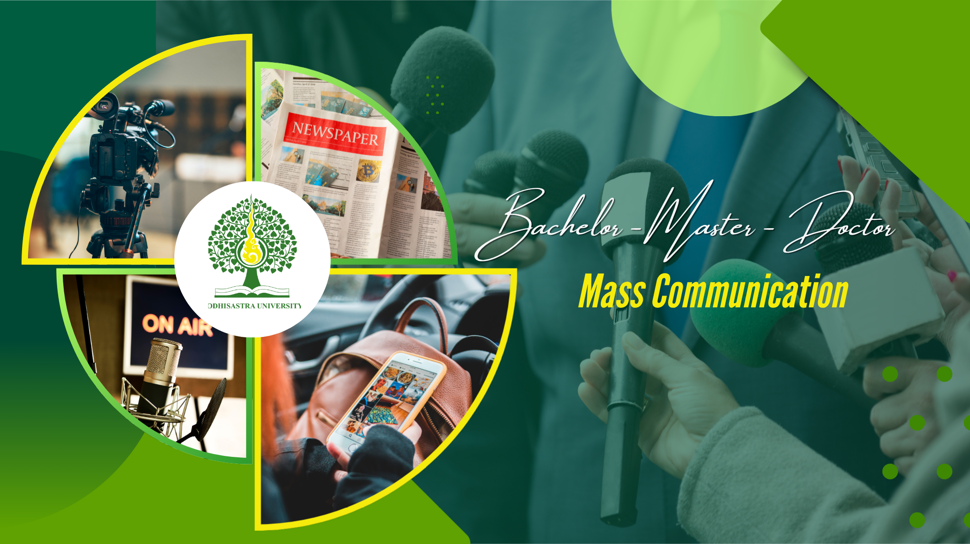
- Mass Communication is a core social science field that studies how information is produced, distributed, and received across various media platforms, profoundly impacting culture, politics, and society. It is the art of creating high-impact messages and managing reputation in the public sphere. It serves as a strategic bridge between Content Production – Audience Analysis – and Social Influence.
- At Bodhisastra University, the Mass Communication program is designed to equip learners with solid theoretical knowledge of communication, media ethics, law, and practical digital content production skills. The curriculum emphasizes critical analysis and the ability to build effective communication strategies in a global and multi-platform context.
- This is the ideal choice for those who aspire to become information shapers – lead public opinion – and use the power of media to foster understanding and social change.
2. Duration of Training
- Bachelor's: 9 - 12 months (flexible program, suitable for both standard and accelerated study).
- Master's: 9 - 12 months.
- Doctoral: 9 - 12 months.
- The path is streamlined, helping learners pursue in-depth knowledge while conveniently combining it with work in news agencies, PR firms, or marketing departments.
- Especially at Bodhisastra University, you will overcome limitations: Flexible learning - International degree - Professional communication breakthrough.
- Work experience in media, journalism, advertising, or public relations can be converted into credits, helping to complete a Bachelor's, Master's, or Doctoral degree in just 9–12 months.
- International degrees are consular legalized, opening up global academic and career opportunities in multinational media corporations and international organizations.
3. Training Format
- 100% Online: Comprehensive online learning, flexible for all individuals, especially journalists, advertising specialists, and brand managers.
Outstanding Benefits:
- Degrees are widely recognized globally, opening the door to boundary-less career and research collaboration opportunities.
- The program focuses on new media trends such as digital media, AI in communication, and data management.
- No entrance English certificate required. A team of professional interpreters will provide support throughout the course.
4. Levels of Training
- Bachelor of Mass Communication – Foundation in Journalism and Content Production
- Highlights: Provides a solid foundation in media writing, multimedia content production (video, podcasts), public relations, advertising, and basic media law. Enhancing experience through practicing communication campaign design and analyzing mass media case studies.
- Career Opportunities: Multimedia Reporter/Editor, Public Relations (PR) Specialist, Internal Communications Specialist, Content Specialist.
- Master of Mass Communication – Strategic Leadership and Media Policy Analysis
- Highlights: Focuses on strategic management and advanced analytical skills: Crisis Communication Management, Global Media Policy, Media Effects Theory, and Big Data Analytics in communication research. Develops the capacity to lead communication and marketing departments.
- Career Opportunities: Chief Communications Officer (CCO), Senior Brand Manager, Public Opinion Analyst, Media Policy Consultant.
- Doctor of Mass Communication – Theoretical Research and Shaping the Future of Media
- Highlights: Designed for scholars seeking to conduct pioneering research, creating new theories on the impact of Digital Media on democracy, mass media culture, communication ethics in the AI era, or censorship policy. The program requires the completion of a Dissertation with significant academic and social contributions.
- Career Opportunities: Professor/Senior Researcher in Communication, Senior Consultant for government agencies on information and communication policy, Media Theorist.
5. Advantages of studying at Bodhisastra University
- Bodhisastra University offers knowledge across borders, combining academic communication theory with a deep focus on professional ethics and the social responsibility of media practitioners.
- The program develops data analysis capabilities and critical thinking, helping learners not only grasp trends but also predict and guide changes in the global communication system.
- Students are committed to developing into influential communication leaders, capable of creating transparent and humanistic messages.




Enrollment Form